
How to Create Custom Receipts using Fake PhonePe APK
Fake PhonePe APK queries typically refer to the operational mechanics of unauthorized receipt generation apps designed to mimic digital transaction success screens. These modified packages allow operators to manually input fictitious amounts, recipient details, and mock Virtual Payment Addresses (VPAs) to generate static images or local screen animations.
Because Android permits manual side-loading of applications outside official app stores, analyzing the underlying technology behind these custom receipts, the severe malware threats they pose, and the verification methods merchants use to defeat them is essential for digital safety.
Technical Mechanics of Custom Receipt Generation
Counterfeit payment applications rely on simple client-side scripting to assemble Fake PhonePe APK interfaces on the host device:
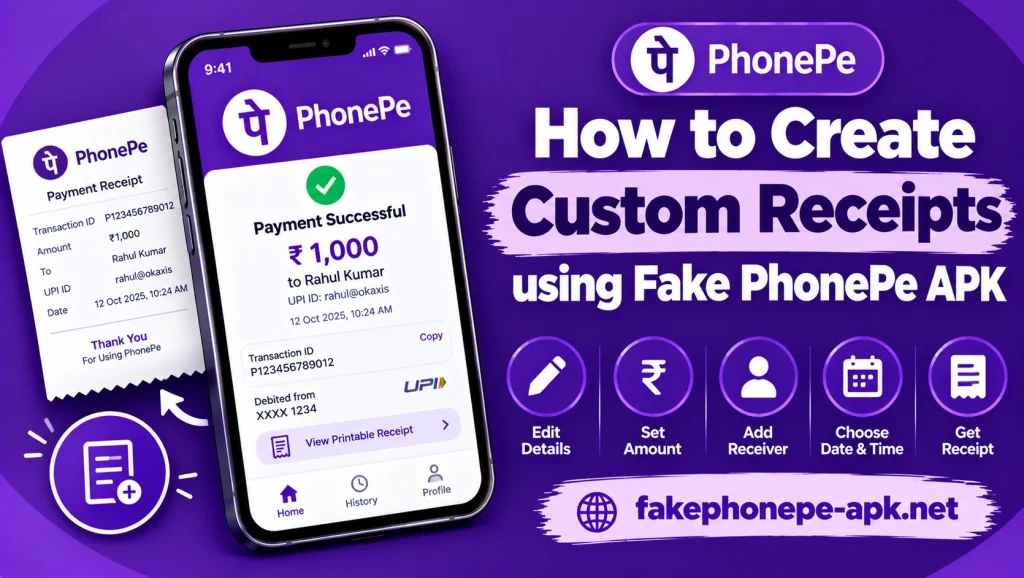
- Local Data Entry Fields: The app presents an input form where users type arbitrary monetary figures, merchant names, custom dates, and fake transaction IDs.
- Variable String Manipulation: Once submitted, local code injects these user-entered strings directly into pre-rendered graphics templates formatted to match official app layouts.
- Client-Side Rendering: The application renders success checkmarks, transaction banners, and timestamps locally on the display without initiating any network handshake.
- Zero Banking Rail Interoperability: Unlike legitimate payment platforms connected to the National Payments Corporation of India (NPCI), these simulation tools have zero connectivity to banking servers, meaning no real money moves between accounts.
Severe Device Risks and Malware Hazards
Attempting to download or use software engineered for custom receipt generation introduces critical security risks to your smartphone:
- Injected Trojan Malware and Keyloggers: Unverified APK packages distributed via Telegram or third-party web portals frequently contain background spyware that monitors screen activity and records keystrokes.
- SMS Interception Permissions: These malicious apps routinely demand broad SMS reading privileges, allowing external hackers to silently capture real banking One-Time Passwords (OTPs).
- Data Harvesting and Credential Theft: Entering personal names, phone numbers, or account handles into unverified applications exposes your digital identity to external command-and-control servers operated by cybercriminals.
- Direct Cybercrime Liabilities: Possessing or utilizing software explicitly designed to generate fake transaction receipts and deceive vendors constitutes cyber fraud, leading to law enforcement investigations and permanent bank account freezes.
Technical Comparison: Official UPI Receipts vs. Custom Fake Receipts
To understand why simulated receipts fail under technical scrutiny, review the following operational comparison:
| Verification Parameter | Authentic UPI Transaction Receipt | Custom Fake PhonePe Receipt |
| Backend Log | Cryptographically signed transaction recorded on bank servers | Local string rendered exclusively on the host device display |
| Merchant Balance Impact | Funds credit instantly to the merchant’s bank account | Zero funds transferred or credited |
| Unique Identifier | 12-digit UPI Reference ID validated by NPCI | Arbitrary or randomly generated numeric string |
| Notification Triggers | Triggers automated merchant sound box and SMS alert | Incapable of triggering merchant hardware or SMS alerts |
Merchant Protection Protocols Against Fake Receipts
To ensure business operations remain secure against counterfeit receipt tactics, store owners and vendors must enforce strict verification procedures:
- Ignore Customer Screen Confirmations: Never rely on a receipt or screenshot displayed on a buyer’s smartphone as proof of payment.
- Deploy Automated Sound Speakers: Install verified merchant audio boxes that announce confirmed deposits in real-time.
- Verify via Official Merchant App: Open your own business dashboard or linked bank app to confirm the updated balance before releasing merchandise.
- Cross-Reference Reference Numbers: Match the 12-digit UPI Reference ID on your official merchant ledger with the customer’s claimed transaction details.
Conclusion
Fake PhonePe APK describes a client-side visual trick designed to generate fake transaction proofs without transferring actual funds. Because these modified APKs operate entirely outside official banking networks, obtaining or testing them exposes your device to severe malware infections, credential theft, and direct legal prosecution. Maintaining safe digital commerce requires merchants to verify all incoming payments strictly through official banking dashboards and hardware audio notifications.