
Fake PhonePe vs Other Fake Payment Apps for Android: Full Comparison
Fake PhonePe vs Other Fake Payment Apps for Android: Full Comparison queries analyze the structural differences, user interface clones, and operational mechanisms across various counterfeit payment simulation utilities active on Android. As digital wallet adoption expands, illicit developers create modified packages (APKs) mimicking major digital payment providers like PhonePe, Paytm, and Google Pay to generate fake transaction screens. Understanding how these fraudulent applications compare technically, the shared security vulnerabilities they introduce, and how merchants can spot them is essential for digital financial safety.
While these counterfeit applications target different brand interfaces, their underlying technical architecture remains fundamentally identical across all variants. None of these applications connect to the Unified Payments Interface (UPI) network, National Payments Corporation of India (NPCI) infrastructure, or banking servers. Instead, they rely on local client-side scripts to manipulate on-screen graphics, rendering mock checkmarks, editable monetary fields, and fake reference numbers designed to deceive vendors during face-to-face retail transactions.
Architectural Comparison Across Counterfeit Payment APKs
Examining how different modded payment applications operate reveals common structural patterns designed to mimic specific financial platforms:
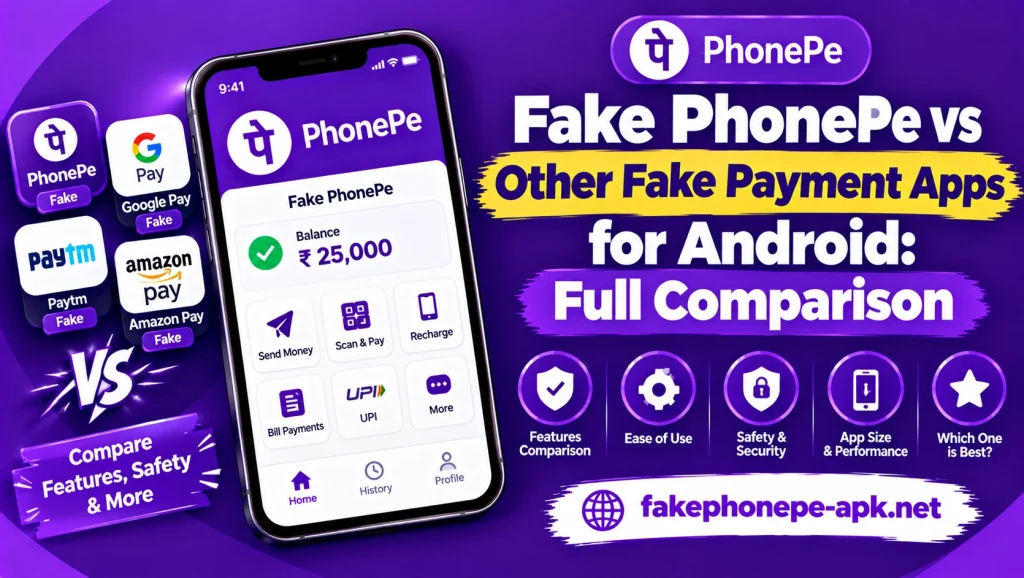
- Fake PhonePe Clones: Focus heavily on replicating purple-themed interface layouts, dynamic glowing checkmarks, custom transaction details, and simulated sound effects modeled after official PhonePe notification alerts.
- Fake Paytm Generators: Emphasize blue-themed receipt displays, editable wallet balance figures, and mock sound box audio triggers designed to imitate legitimate merchant audio alerts.
- Fake Google Pay Simulators: Replicate teal/white interface designs, custom recipient Virtual Payment Address (VPA) fields, and simulated success animations modeled after Google Pay’s reward and transaction screens.
- Universal Multi-App Generators: Advanced counterfeit packages offer toggleable UI templates within a single APK, allowing operators to switch between PhonePe, Paytm, and Google Pay skins on demand.
Technical Security Risks and Malware Hazards
Downloading, side-loading, or running any variant of a counterfeit payment application introduces severe hardware and data safety risks to your mobile device:
- Injected Trojan Malware and Spyware: Modded APK packages distributed via Telegram, unverified blogs, or file-hosting portals frequently bundle Remote Access Trojans (RATs) and keyloggers to record screen activity.
- SMS Interception Permissions: These malicious applications routinely demand broad SMS reading privileges, allowing external hackers to silently capture real banking One-Time Passwords (OTPs) and hijack financial accounts.
- Data Harvesting and Credential Theft: Entering contact details, personal names, or mock account handles into unverified APKs transmits device data to command-and-control servers operated by cybercriminals.
- Direct Cybercrime Liabilities: Possessing or utilizing software explicitly engineered to generate fake payment proofs and defraud merchants constitutes cyber fraud under financial crime laws, leading to direct law enforcement investigation and frozen bank accounts.
Comparative Matrix: Fake Payment App Variants vs. Authentic Banking Rails
To understand how various counterfeit payment utilities compare against genuine digital wallet infrastructure, review the following parameter matrix:
| Feature / Parameter | Fake PhonePe App Mod | Fake Paytm / GPay Mod | Authentic UPI App Gateway |
| Backend Connectivity | Local client-side script only | Local client-side script only | Encrypted TLS link to NPCI & bank servers |
| UI Customization | Editable text & PhonePe theme | Editable text & Paytm/GPay theme | Secure, immutable transaction log |
| Merchant Account Credit | Zero funds transferred | Zero funds transferred | Real-time debit & instant account credit |
| Hardware Audio Support | Mock local speaker sound | Mock local speaker sound | Authentic merchant sound box confirmation |
How Merchants Can Defeat Multi-App Simulation Scams
Retail store owners and cashiers can easily protect their daily revenue against all variants of counterfeit payment apps by following strict verification protocols:
- Ignore Customer Phone Displays: Never accept a transaction success screen or screenshot displayed on a buyer’s smartphone as proof of payment, regardless of which app interface is shown.
- Deploy Automated Merchant Sound Boxes: Rely exclusively on dedicated merchant audio speakers provided by payment service providers that announce confirmed deposits out loud in real-time.
- Verify via Official Business Dashboards: Check your own merchant application or linked bank account to confirm the credited balance has updated before handing over merchandise.
- Cross-Reference 12-Digit Reference Numbers: Verify that the 12-digit UPI Reference ID on your official bank ledger matches the transaction details claimed by the customer.
Conclusion
Fake PhonePe vs Other Fake Payment Apps for Android: Full Comparison demonstrates that despite cosmetic differences in brand styling and color themes, all counterfeit payment applications operate as offline visual tricks without real banking integration. Because every modded APK variant carries severe malware risks, credential theft threats, and strict legal consequences, avoiding unauthorized software side-loading entirely is the only way to maintain mobile security, personal privacy, and financial safety.