
How to Download & Install Fake PhonePe APK on Android?
Fake PhonePe APK on Android device leads directly into one of the most hazardous areas of third-party mobile software. These modified or counterfeit applications are designed to simulate payment receipt screens, mimic wallet balances, and deceive merchants without connecting to real banking rails.
Because Android permits manual side-loading of APK files outside the Google Play Store, understanding the step-by-step process scammers use, the technical security risks involved, and the severe legal consequences of hosting or running such software is crucial for device protection.
How Scammers Attempt to Install Counterfeit APKs
To side-load an unauthorized application onto an Android smartphone, individuals typically bypass default operating system safeguards through a specific sequence of actions:
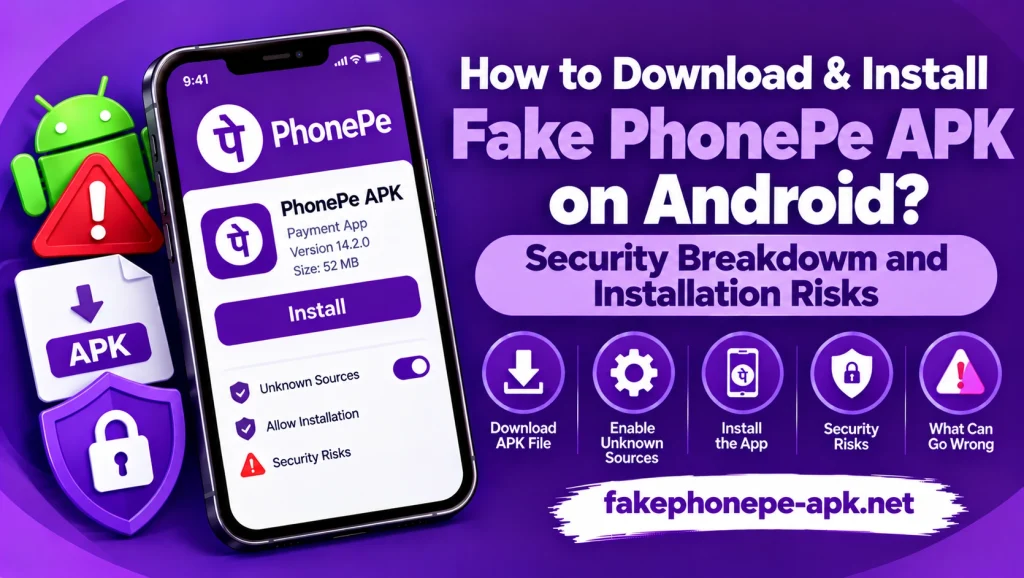
- Obtaining the Modified APK File: Fraudsters source the
.apkinstallation package from unverified file-sharing portals, Telegram channels, or dubious third-party websites, as these apps are strictly banned from official app stores. - Enabling Unknown Sources: The installer navigates to Android system settings, selects Security & Privacy, and explicitly enables the Install Unknown Apps or Allow from this source toggle for their web browser or file manager.
- Granting Dangerous System Permissions: During the package installation phase, the counterfeit app demands excessive, non-standard permissions—such as accessibility service control, screen overlay privileges, and storage read/write access.
- Bypassing Play Protect Warnings: When Google Play Protect flags the package as a malicious utility or unverified app, users attempting installation actively override the system security prompt by selecting “Install Anyway.”
Severe Risks of Downloading and Installing Fake Payment APKs
Installing an unverified, modified APK onto your personal smartphone introduces immediate and catastrophic security risks to your device and personal privacy:
- Malware and Spyware Payload Delivery: Counterfeit APKs are frequently bundled with Remote Access Trojans (RATs), keyloggers, and banking trojans. Once installed, these background scripts silently capture keystrokes, steal saved passwords, and monitor personal activity.
- SMS and Interception Exploits: By requesting access to your SMS directory, malicious apps can intercept One-Time Passwords (OTPs) sent by your actual bank, enabling remote hackers to compromise your legitimate financial accounts.
- Device Hijacking via Accessibility Services: Granting accessibility permissions to an unauthorized APK allows the app to read on-screen text, execute clicks in the background, and grant itself administrative rights without your knowledge.
- Severe Legal Liabilities: Possessing, testing, or utilizing software explicitly created to generate fake payment receipts and defraud merchants constitutes cyber fraud under financial crime laws, leading to direct law enforcement investigation and account freezing.
Safe Installation vs. Malicious Side-Loading
Understanding the fundamental differences between official app deployment and side-loading counterfeit Fake PhonePe APK highlights why side-loading financial utilities is dangerous:
| Parameter | Official Google Play Store Installation | Side-Loading Counterfeit APK File |
| Security Vetting | Scanned by Google Play Protect for malicious code | Zero security checks; high probability of malware |
| Permission Control | Strict sandboxing and minimal necessary permissions | Demands dangerous overlay and accessibility access |
| Software Updates | Automated security patches and feature updates | Static, unpatched binary operated by anonymous actors |
| Legal Standing | Legitimate, licensed digital utility | Unauthorized software tied to financial cybercrime |
What to Do If You Have Already Downloaded a Fake APK
If an unauthorized or counterfeit APK has already been downloaded or installed on your Android device, take these immediate cleanup steps to secure your hardware:
- Disconnect Network Connectivity: Immediately turn off Wi-Fi and Mobile Data to prevent the application from transmitting intercepted data or communicating with remote command servers.
- Uninstall the Application: Open Settings > Apps, locate the suspicious software, force stop it, and select Uninstall.
- Delete Residual Files: Open your Android File Manager, navigate to the Downloads folder, and permanently delete the
.apkinstaller package. - Revoke Accessibility and Overlay Rights: Navigate to Settings > Accessibility and ensure no unauthorized third-party apps retain active permissions.
- Run a System Security Scan: Perform a full security scan using Google Play Protect or a trusted mobile antivirus tool to detect and remove lingering background threats.
Conclusion
Attempting to download and install a Fake PhonePe APK requires overriding fundamental Android security protections and exposing your mobile device to severe malware, data theft, and legal prosecution. Because these counterfeit packages operate completely outside official banking networks and security guidelines, avoiding unauthorized APK downloads entirely is the only way to maintain personal privacy and financial safety.